Your Instagram looks active. Ads are getting clicks. Yet sales are flat, and every meeting ends with the same question: what should we change?
Before increasing the budget or posting more often, examine what is actually happening. A social media and ad account audit connects your content, campaigns, tracking, and customer journey so you can fix the right problems—not just the most visible ones.
What Is a Social Media and Ad Account Audit?
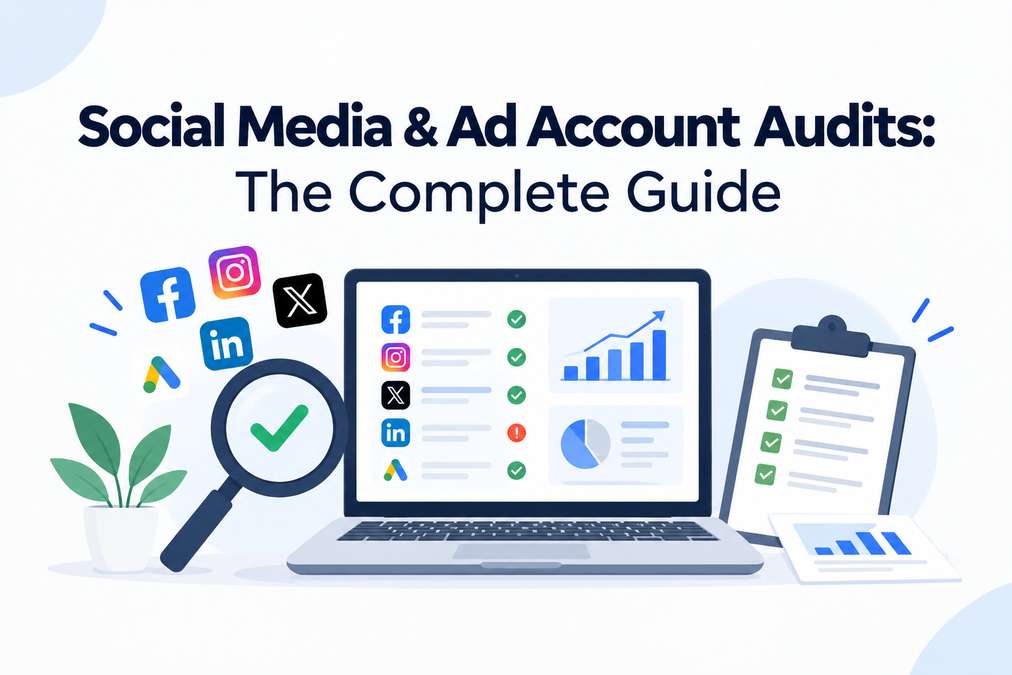
A social media audit evaluates your organic profiles, audience, content, engagement, and traffic. An ad account audit examines paid campaigns, creative, budgets, targeting, conversion tracking, and profitability.
Together, they show whether your marketing channels support the same business goal. For a D2C brand, that might mean acquiring profitable first-time customers while building enough trust to earn repeat purchases.
An audit is not simply a list of weak metrics. It should explain what is working, where performance breaks down, and what to do next.
Why Audits Matter Before You Scale
A campaign reporting strong return on ad spend (ROAS) may still be unprofitable after product costs, shipping, and discounts. Similarly, an Instagram Reel can attract thousands of views without bringing relevant shoppers to your store.
Audits help separate attention from business outcomes. They can uncover duplicated spending, inconsistent messaging, tired creative, broken purchase events, or landing pages that do not deliver on an ad’s promise.
The goal is not to change everything. It is to stop guessing.
How to Conduct a Complete Social Media and Ad Account Audit
1. Start With Goals and a Reliable Baseline
Choose a reporting period—often the previous 30 to 90 days—and compare it with an equivalent earlier period. Account for promotions, seasonality, and major budget changes.
Define your success metrics before opening dashboards: qualified leads, purchases, customer acquisition cost (CAC), ROAS, conversion rate, or repeat-customer revenue. A brand focused on awareness will need a different scorecard from one trying to improve purchase profitability.
2. Audit Your Organic Social Media Presence
Review Instagram, Facebook, TikTok, and Pinterest profiles individually. Does each bio explain who the brand helps? Are links working? Do pinned posts and highlights answer common buying questions?
Next, assess posting consistency, content pillars, formats, audience response, and referral traffic. Look beyond follower growth: saves, shares, meaningful comments, profile visits, and website clicks often reveal more about content quality.
Identify topics worth repeating and gaps in product education or social proof. If you need a more structured approach, explore organic social media strategy services.
3. Check Ad Account Health and Campaign Structure
In Meta, TikTok, or Pinterest, start with account access, security, billing, connected assets, and policy or delivery warnings. Remove unnecessary access and confirm the right people own critical assets.
Then examine campaign objectives, naming conventions, budget distribution, audience overlap, exclusions, and placement performance. Are too many small ad sets competing for limited data? Are acquisition ads reaching recent purchasers unnecessarily?
A Meta Ads management review can help distinguish structural issues from creative or funnel problems. For additional examples, see common Meta Ads mistakes.
4. Review Creative and Audience Fit
Sort ads by spend and outcomes, not just likes or click-through rate (CTR). Examine hooks, offers, visual formats, product demonstrations, customer testimonials, and calls to action.
Compare creative across awareness stages. A first-time visitor may need a problem-solution explanation; someone who abandoned checkout may need reassurance about delivery or returns.
Watch for rising frequency alongside declining response, but do not assume every performance dip means creative fatigue. The ad creative strategy guide explains how to turn these findings into focused tests.
5. Verify Tracking and Attribution
This step can change the meaning of every other metric. Check that purchase, lead, add-to-cart, and checkout events fire correctly and carry accurate values.
For Meta, review Pixel and Conversions API signals, event matching, and deduplication. Meta’s official Conversions API guidance covers these checks.
Compare platform reporting with store orders and analytics, remembering that attribution windows and counting methods differ. In Google Analytics 4, important website actions are tracked as key events; Google’s documentation explains how these differ from advertising conversions. Reporting differences are clues to investigate, not automatic proof that tracking is broken.
6. Inspect the Post-Click Experience
Click through your own ads on a phone. Does the landing page match the promise? Is pricing clear? Are shipping details, reviews, and checkout easy to find?
Compare product-page conversion rates, cart abandonment, and new-customer CAC with your margins. If visitors engage with ads but leave the site quickly, increasing spend will not repair the experience.
7. Turn Findings Into a Prioritized Roadmap
Group issues by impact and effort:
- Fix now: Broken tracking, unauthorized access, incorrect links, or serious budget waste.
- Test next: New hooks, landing-page messaging, audience exclusions, and content formats.
- Monitor: Creative frequency, engagement quality, CAC, and conversion trends.
Give every recommendation an owner, deadline, and measurement plan. A useful audit ends with decisions, not a hundred-slide report.
How Often Should You Audit?
Review campaign performance weekly, conduct a focused monthly check, and complete a deeper cross-channel audit quarterly or after major changes such as a website redesign, tracking migration, or sudden performance drop.
Frequently Asked Questions
Can a small brand audit its own accounts?
Yes. Start with platform insights, store analytics, and the checklist above. A specialist can help when tracking or multi-platform reporting makes the diagnosis unclear.
Is an audit the same as ongoing management?
No. An audit diagnoses and prioritizes problems; management implements tests, monitors results, and adjusts strategy over time.
Final Thoughts
The most valuable audit tells you why growth has stalled and where your next improvement should come from. Organic content builds credibility; paid media expands reach; accurate measurement shows whether either one is producing valuable customers.
If you want an outside perspective, a paid and organic social media audit can bring those pieces into one practical action plan.